

Nepal is a magical country where mountains touch the sky and your heart feels alive with every step. For visitors who love adventure, trekking in Nepal is a dream come true. From easy trails to hard climbing, Nepal has everything, and four treks everyone should know are the Mardi Himal Trek, the Annapurna Circuit Trek, the Nar Phu Valley Trek, and the Everest Base Camp Trek. In this article, we go deep inside these trails: what you see, how you prepare, and why every step here is unforgettable.
Mardi Himal Trek – Hidden Gem of Annapurna
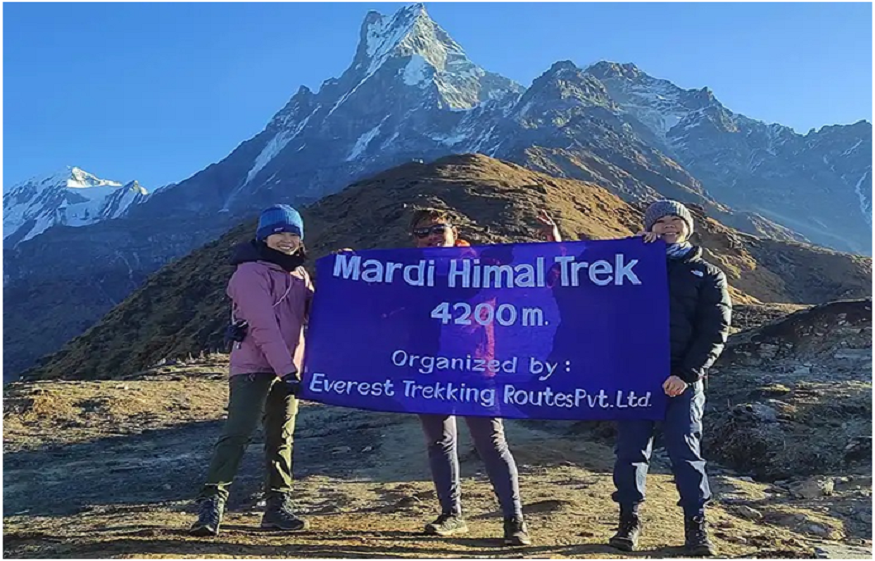
The Mardi Himal Trek is a new popular trek near the Annapurna region. Many tourists know Annapurna Base Camp Trek, but Mardi Himal still has a quiet, peaceful, and amazing view. The trail starts from Pokhara city, one of the most beautiful cities in Nepal. The trail takes you through green forest, small villages, rhododendron forest, and many local teahouses where you can rest and eat delicious local food.
This trek is moderate, not too hard, but some steep paths make your legs tired. The best time to go on the Mardi Himal Trek is spring (March to May) and autumn (September to November). During spring, rhododendron flowers everywhere, and the mountain looks colorful and beautiful. Autumn brings clear skies; you see the whole Annapurna, Machapuchhre (Fishtail), and Dhaulagiri peaks from the top.
The Mardi Himal Trek is not long like the Annapurna Circuit Trek, usually 5 to 7 days long. You stay in small tea houses, meet friendly locals, watch their culture, live in mountains, and feel the simplicity of life. Sunrise and sunset from Mardi Himal Base Camp is a dream view. Mountains glow red when the sun rises, cold wind touches the face, and silence is everywhere; only birds sing.
For a first-time trekker, Mardi Himal is perfect. Trail safe, not crowded, easy to communicate, and guides available if needed. Trek is also good for photography lovers; every turn brings new pictures, from forests to mountains, waterfalls, and small bridges.
Annapurna Circuit Trek – Classic Adventure of Nepal
If Mardi Himal is a small gem, Annapurna Circuit Trek is the king of treks. This is one of the longest treks in Nepal, taking 14 to 18 days. Circuits go around the Annapurna massif, through villages, rivers, high passes, and amazing landscapes that change every day. You see green valleys, deserts like high mountains, waterfalls, suspension bridges, rhododendron forests, terraced fields, and traditional Gurung and Thakali villages.
The Annapurna Circuit Trek is famous because it gives a full Nepal trekking experience. You climb Thorong La Pass, 5416 meters, the highest point of the trek. This is a challenge; many people get headaches and colds, but the reward is unbelievable. From the pass, you see Annapurna, Dhaulagiri, Manaslu, Nilgiri, and Gangapurna peaks. A feeling is like standing on a world roof.
The best time for the Annapurna Circuit Trek is autumn and spring, when the sky is clear and the temperature is good for walking. Winter is possible, but there is a high chance snow will block the pass. Summer is not recommended because of rain, landslide risk, and slippery trails.
During the trek, teahouses and lodges are available, serving local food dal bhat every day, momo, and noodles. People are friendly and helpful. You feel culture close because you see festivals, prayer flags, and monasteries and meet monks. The Annapurna Circuit Trek is about the life of mountain people, their struggle, and happiness, not just trekking.
Trekking here is not easy for beginners, but with guide help, the porter can carry a heavy bag and prepare the body before the trek to make the journey smooth. Some people complete it in 14 days; some take 18 days, depending on how much time they enjoy the village and nature.
Nar Phu Valley Trek – Remote Adventure for Brave Heart
The Nar Phu Valley Trek is for visitors who love remote, untouched trails. This is a hidden gem; fewer people go here, so the experience is special. The trek starts from Manang, a small town near Annapurna. The trail goes through ancient villages, monasteries, cold deserts, high passes, and the unique culture of Nar and Phu people.
Nar Phu Valley is an old Tibetan culture, with houses made of stone, yak herds in fields, and prayer flags everywhere. The landscape is very different from the green valley of Mardi Himal. You see barren mountains, blue sky, glaciers, and ice rivers. Perfect for adventure, photography, and a quiet mind.
The trek takes 10 to 12 days, not too long but difficult because of the high altitude. Passes like Kang La Pass give a tough challenge, but the view is a reward for every step. Trek is also seasonal, best in spring and autumn. Winter is very cold, and snow blocks the trail, and summer monsoons risk landslides.
Nar Phu Valley Trek is not crowded, so peace is guaranteed. A few teahouses, small local food, and a real remote life. For visitors who want to trek alone or avoid crowded Everest Base Camp, Nar Phu Valley is perfect. Guides are mandatory because the trail is confusing and remote.
For a first-time trekker, Nar Phu is difficult, and I need some trekking experience. But adventure lovers, photographers, and nature lovers will feel like heaven here. Every village, every mountain, and every river tells the story of untouched Nepal.
Everest Base Camp Trek – Dream of Every Trekker
No article about the Nepal trek is complete without the Everest Base Camp Trek. This trek is famous worldwide, a dream of millions. The trail starts from Lukla airport, a very small airport surrounded by mountains. The trek passes Namche Bazaar, Tengboche, and Dingboche and finally reaches Everest Base Camp, 5364 meters.
Everest Base Camp Trek, not just mountains, is adventure, culture, and challenge. You see Sagarmatha (Everest), Lhotse, Nuptse, Ama Dablam, and many high peaks. The trail passes Sherpa villages, monasteries, suspension bridges, rivers, and forests. You feel the culture of Sherpa people: strong, kind, and very helpful.
Trek takes 12 to 14 days, depending on pace. The best time is spring and autumn. Spring rhododendrons bloom, mountains clear. The autumn sky is perfect, and the view is long-distance. Winter cold is not recommended; summer monsoon is risky.
Accommodation is available in lodges, tea houses, and hot showers sometimes, with local food like dal bhat, noodles, and momo. Guides and porters available. For a first-time trekker, the Everest Base Camp Trek is a challenge and requires preparation for altitude. But the experience was unforgettable. Sunrise at Kala Patthar gives an amazing view; Everest glows red, clouds below, feeling like touching the sky.
Everest Base Camp Trek is also a famous photography trek. Mountains, rivers, villages, prayer flags, yaks, and glaciers all give amazing pictures. Many visitors come just for a photo. But trekking is not easy; body preparation, water, snacks, jackets, and boots are all important.
How to Prepare for These Treks
All four treks need preparation. The body prepares with walking, stair climbing, and the gym. Proper trekking shoes, a jacket, a backpack, gloves, a hat, a water bottle, and snacks are necessary. Guides and porters are helpful, especially for long treks like Annapurna Circuit and Everest Base Camp.
Altitude sickness is common in high treks: drinking water, moving slowly, and resting at tea houses. Listen to your body. For first-time trekkers, short treks like Mardi Himal are a good start, building confidence before long treks like the Annapurna Circuit or Everest Base Camp.
The food is simple, dal bhat every day, but it fills my stomach. Try momo, noodles, soup, and tea. Teahouses are comfortable; some have heaters, some do not, and winter is cold. Prepare for hot days and cold nights.
Permits are needed for some treks. The Annapurna region requires an ACAP permit and a TIMS card. Nar Phu and Everest require special permits; check before trekking. Guides can arrange.
Why Choose Nepal for Trekking
Nepal is not just mountains; the culture is also rich. Friendly people, amazing landscapes, food, and tradition make the trek unique. Each trek offers a different experience: Mardi Himal is peaceful and easy, Annapurna Circuit is classic and long, Nar Phu Valley is remote and untouched, and Everest Base Camp is iconic and challenging.
Trekking in Nepal is also cheap compared to other countries. Tea houses are affordable, food is cheap, and guides and porter service are available. For visitors who want adventure, culture, and amazing landscapes in one trip, Nepal is perfect.
Safety is important; always hire a guide if the trail is unknown, especially Nar Phu and high-altitude treks. Listen to advice, carry first aid, walk slowly, and enjoy every step.
Conclusion
Nepal trekking is a life-changing experience. Whether you want an easy trek with the best view like Mardi Himal Trek, a classic adventure like Annapurna Circuit Trek, a remote unexplored Nar Phu Valley Trek, or an iconic Everest Base Camp Trek, Nepal has it all. Mountains, villages, rivers, forests, monasteries, people, culture, and food: every step teaches something new.
Visitors should choose to trek according to time, interest, and fitness. Spring and autumn are the best seasons. Prepare your body, hire a guide if needed, and enjoy mountains, sunrises, sunsets, and culture. Photography, adventure, peace, and challenge are all in Nepal trekking.
Read More: How fit do you need to be to trek to Everest Base Camp?
Every trek gives me a lifetime memory. You feel mountains, touch the sky, meet people, experience culture, and enjoy nature. Nepal trekking, not just walking, is a journey of heart, mind, and soul.
Nepal is waiting for visitors, mountains are calling, trails are ready, and adventure is ready. Don’t miss the chance to walk, climb, explore, and live your dream.
Contact Details
——————————–
Everest Trekking Routes Pvt. Ltd.
16 Khumbu, Nayabazaar, Kathmandu, Nepal
Mobile : +977-9843467921 (Rabin)
Email: [email protected]